- $99,240 Earth Scientist Median Salary (2024, BLS)
- 27% Percentage of Earth Science workforce retiring by 2030 (AGI)
- 98.5% Employment Rate with Earth Science Degrees (Business Insider)
Explore Earth Science Careers
Climate Change and Natural Hazard Risk Assessment and Mitigation
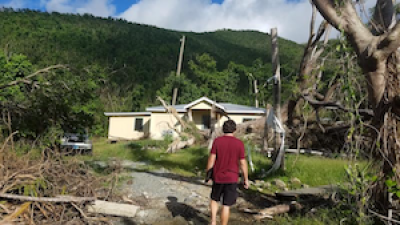
In the face of changing climate and increasing risks from natural hazards such as wildfires, hurricanes, landslides, and drought, Earth scientists are urgently needed to mitigate causes and help communities and ecosystems adapt to ongoing changes. This interdisciplinary field encompasses researchers, policy scientists, and outreach specialists, all focused on protecting communities from current and future natural disasters, reducing climate change impacts, and enhancing resilience.
The School of Earth Sciences' Climate, Water and Environment and Geophysics B.S. programs provide essential coursework in natural hazards, climate change, and Earth systems to launch a successful career in climate change and natural hazard risk assessment and mitigation, including preparation for professional licensure exams and graduate study.
Find out more about careers and degree programs in Climate Change and Natural Hazard Risk Assessment and Mitigation.
Meet some of our alumni with careers in this area.
How to get started? Take a General Education course:
- EARTHSC 1151: Natural Hazards (3 units, GE Foundation: Natural Sciences)
- EARTHSC 1121: The Dynamic Earth (3 units, GE Foundation: Natural Sciences)
- EARTHSC 2203: Environmental Geoscience (3 units, GE Theme: Sustainability)
- EARTHSC 2204: Exploring Water Issues (3 units, GE Theme: Lived Environments)
- EARTHSC 2911: The Climate Crisis: Mechanisms, Impacts, and Mitigation (4 units, GE Theme: Sustainability)
Critical Mineral Resources

Critical minerals are essential non-fuel mineral resources required for existing and emerging energy technologies that face limited supply and vulnerable supply chains. U.S. federal agencies have determined that disruption or absence of these minerals could significantly impact national security. The designation of "critical" evolves over time as supplies and societal needs shift. Demand for critical minerals, particularly rare earth elements (REEs), has surged with the proliferation of high-tech devices including wind turbines, solar panels, electronics, and batteries for personal and commercial use. Earth scientists play a vital role in exploring for, identifying, and evaluating the economic potential of current and prospective mineral deposits.
The School of Earth Sciences' Geological Sciences B.S. program provides essential coursework in Earth materials, structure, and exploration to launch a successful career in critical minerals, including preparation for professional licensure exams and graduate study.
Find out more about careers and degree programs in Critical Minerals.
Meet some of our alumni with careers in this area.
How to get started? Take a General Education course:
- EARTHSC 1108: Gemstones (3 units, GE Foundation: Natural Sciences)
- EARTHSC 1121: The Dynamic Earth (3 units, GE Foundation: Natural Sciences)
- EARTHSC 2210: Energy, Mineral Resources, and Society (3 units, GE Theme: Sustainability)
Energy Transition

Energy transition refers to the global shift from fossil fuels to cleaner, sustainable energy systems, driven by the urgent need to mitigate climate change, reduce air pollution, and enhance energy security. This transformation is creating new career opportunities focused on renewable energy technologies, energy efficiency, sustainability, and climate resilience. Emerging roles span geothermal, wind, and solar energy development, carbon capture and storage, and Earth science applications for battery materials and energy storage systems. These careers underscore the continuing importance of Earth science expertise in the energy sector, though required skills and competencies are rapidly evolving to meet new technological demands.
The School of Earth Sciences' Geological Sciences and Geophysics B.S. programs provide essential training in Earth structure, materials, geochemistry, and subsurface exploration to launch a successful career in energy transition, including preparation for professional licensure exams and graduate study.
Meet some of our alumni with careers in this area.
How to get started? Take a General Education course:
- EARTHSC 1121: The Dynamic Earth (3 units, GE Foundation: Natural Sciences)
- EARTHSC 2210: Energy, Mineral Resources, and Society (3 units, GE Theme: Sustainability)
Hydrogeology and Water Resources Management
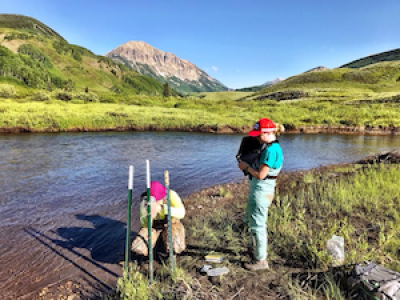
Hydrogeology focuses on the distribution, movement, and quality of groundwater beneath the Earth's surface. Hydrogeologic data inform critical decisions about groundwater availability, sustainability, and access for drinking water, industry, and agriculture. Hydrogeologists investigate the subsurface through boreholes, geophysical methods, and water-quality sampling to analyze constituents and pollutants. They use satellite data to map topography and monitor surface water bodies, while ground-based surveys, drones, and aircraft help visualize subsurface aquifer structures. Computational modeling tools allow hydrogeologists to predict how climate change and over-pumping affect aquifers and develop strategies to mitigate these impacts.
The School of Earth Sciences' Climate, Water and Environment Bachelor of Science program provides necessary coursework in hydrogeology and geochemistry to launch a successful career in this field, including preparation for professional licensure exams and graduate study.
Meet some of our alumni with careers in this area.
How to get started? Take a General Education course:
- EARTHSC 1121: The Dynamic Earth (3 units, GE Foundation: Natural Sciences)
- EARTHSC 2203: Environmental Geoscience (3 units, GE Theme: Sustainability)
- EARTHSC 2204: Exploring Water Issues (3 units, GE Theme: Lived Environments)
- EARTHSC 2911: The Climate Crisis: Mechanisms, Impacts, and Mitigation (4 units, GE Theme: Sustainability)
Data Analytics and Machine Learning

Data analytics and machine learning (ML), including artificial intelligence (AI) and deep learning (DL), are transforming Earth sciences by revolutionizing how researchers analyze vast amounts of observational data. These technologies enable more efficient, scalable prediction and modeling of complex natural phenomena, leading to better-informed decisions in environmental management, resource exploration, national security, and hazard mitigation.
All School of Earth Sciences students develop data analytics and machine learning skills through coursework beginning with EART2245: Introductory Data Analysis for Earth and Environmental Sciences and advancing to courses like EARTHSC 5757: Artificial Intelligence in Earth Sciences. Students apply these skills in hands-on research experiences, gaining a competitive edge for 21st-century careers.
Meet some of our alumni with careers in this area.
Geodetic Science and Technology

Geodesy is the fundamental science that enables us to know where we are and create maps of our world. It focuses on the representation and measurement of space, mass, and time; reference systems, coordinates, and orientation; gravity, rotational dynamics, and orbital mechanics; and how all of these change over time. Geodesy underpins critical technologies and industries including the space industry, shipping, aviation, autonomous vehicles, drones, smart grids, computer and smartphone ecosystems, smart cities, location-based commerce, precision agriculture, AI, data analytics, and the Internet of Things, as well as countless scientific and engineering disciplines.
The School of Earth Sciences hosts a world-leading academic program in Geodetic Science, offering the only graduate degrees (M.S & Ph.D.) in Geodetic Science in the United States. Find out more about SES's Geodetic Science program.
Meet some of our alumni with careers in this area.
Environmental Monitoring and Remediation
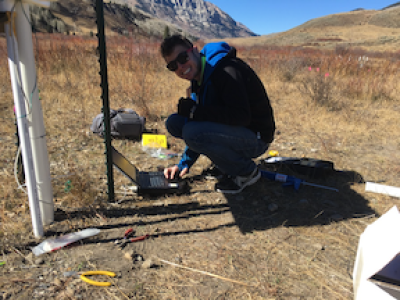
Environmental remediation addresses hazardous substances released into groundwater, surface water, soil, or bedrock through site characterization, contaminant removal, treatment, or in-situ containment. Environmental monitoring uses specialized tools and techniques to observe environmental systems, establish baseline parameters, and quantify the impacts of human activities. These fields are essential for protecting public health and restoring contaminated sites. Careers in environmental monitoring and remediation are available in private consulting, government agencies, academic research, education, and public policy.
The School of Eaeth Sciences' Climate, Water and Environment Bachelor of Science program provides essential coursework in hydrogeology and geochemistry to launch a successful career in this field, including preparation for professional licensure exams and graduate study.
Meet some of our alumni with careers in this area.
How to get started? Take a General Education course:
- EARTHSC 1121: The Dynamic Earth (3 units, GE Foundation: Natural Sciences)
- EARTHSC 2203: Environmental Geoscience (3 units, GE Theme: Sustainability)
- EARTHSC 2204: Exploring Water Issues (3 units, GE Theme: Lived Environments)
Science Writing and Policy
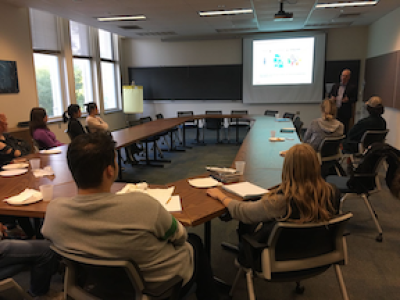
Science writing and policy professionals translate complex scientific concepts for diverse audiences across the geosciences and beyond. These careers encompass several distinct but related paths. Science writers discover creative ways to share scientific research with the public through journalism, media relations, and science communication. Their work takes many forms—written articles, photography, videos, podcasts, and social media—and some science communicators are also active researchers while others work full-time in communications. Science journalists go further than translation: they provide context for new advances, interpret findings, and hold scientists accountable for their work and claims. Media relations professionals serve as liaisons between organizations—universities, government agencies, or private companies—and the press, helping to shape narratives and secure coverage. Science policy professionals also translate complex topics for non-specialist audiences, but focus specifically on informing and influencing policy decisions at local, state, and federal levels.
A Bachelor of Arts (B.A.) in Earth Sciences provides ideal preparation for these careers, combining essential training in earth and natural sciences with opportunities to develop strong communication skills and explore relevant coursework in the humanities and social sciences.
Meet some of our alumni with careers in this area.
How to get started? Take a General Education course:
- EARTHSC 1105: Geology of the National Parks (3 units, GE Foundation: Natural Sciences)
- EARTHSC 1108: Gemstones (3 units, GE Foundation: Natural Sciences)
- EARTHSC 1121: The Dynamic Earth (3 units, GE Foundation: Natural Sciences)
- EARTHSC 1151: Natural Hazards (3 units)
- EARTHSC 2203: Environmental Geoscience (3 units, GE Theme: Sustainability)
- EARTHSC 2204: Exploring Water Issues (3 units, GE Theme: Lived Environments)
- EARTHSC 2205: The Planets (3 units)
EARTHSC 2911: The Climate Crisis: Mechanisms, Impacts, and Mitigation (4 units, GE HIP, Theme: Sustainability)
The learning experience and community of a small school with with the opportunities, resources and faculty of a premier research university
- 2:1 Majors to Faculty
- 16 Average Core & Elective Class Size
- 100% Students Engaged in Research