Field Trip Takes Graduate Students Through Guadalupe Mountains' Carbonate Formations
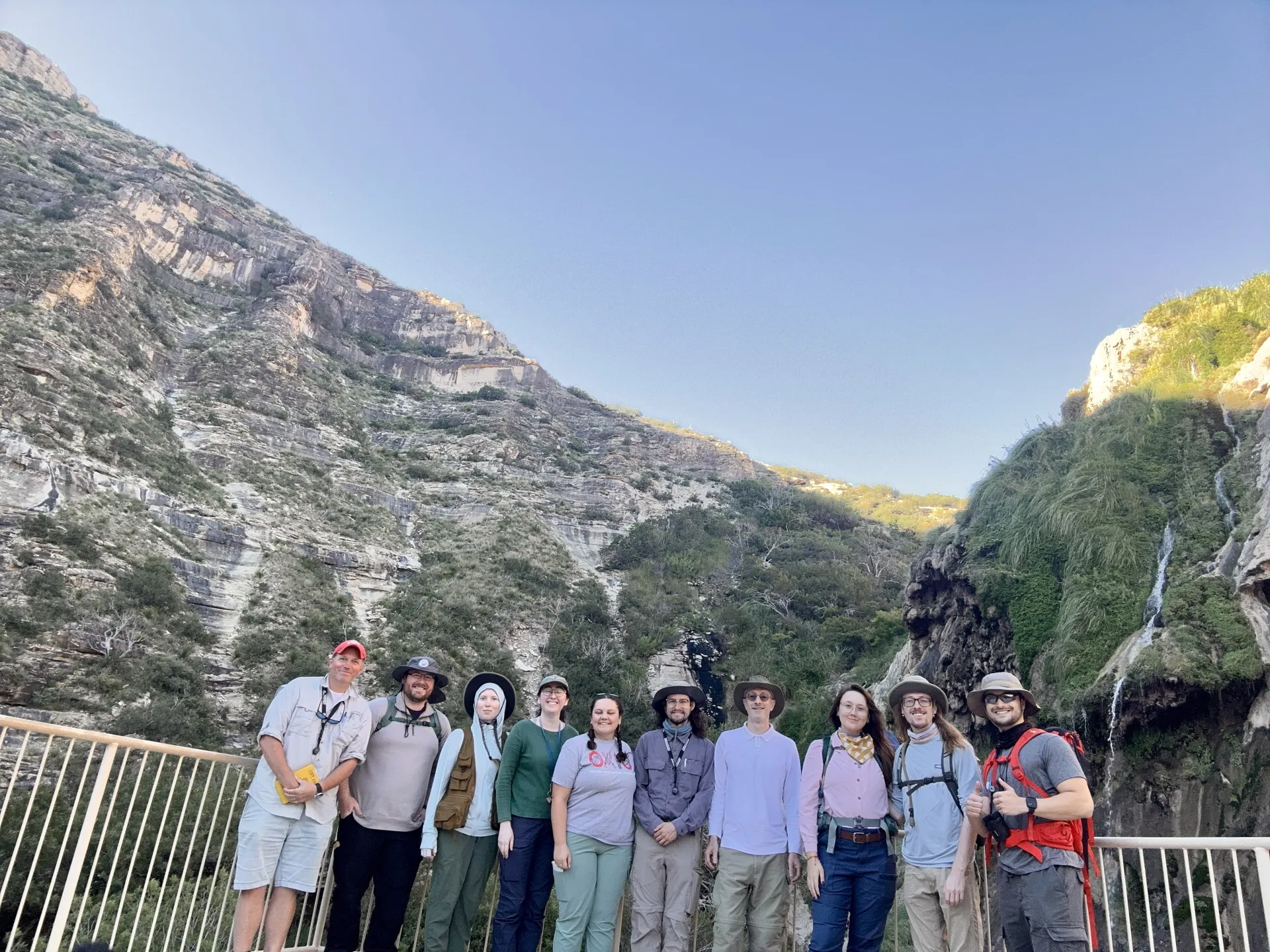
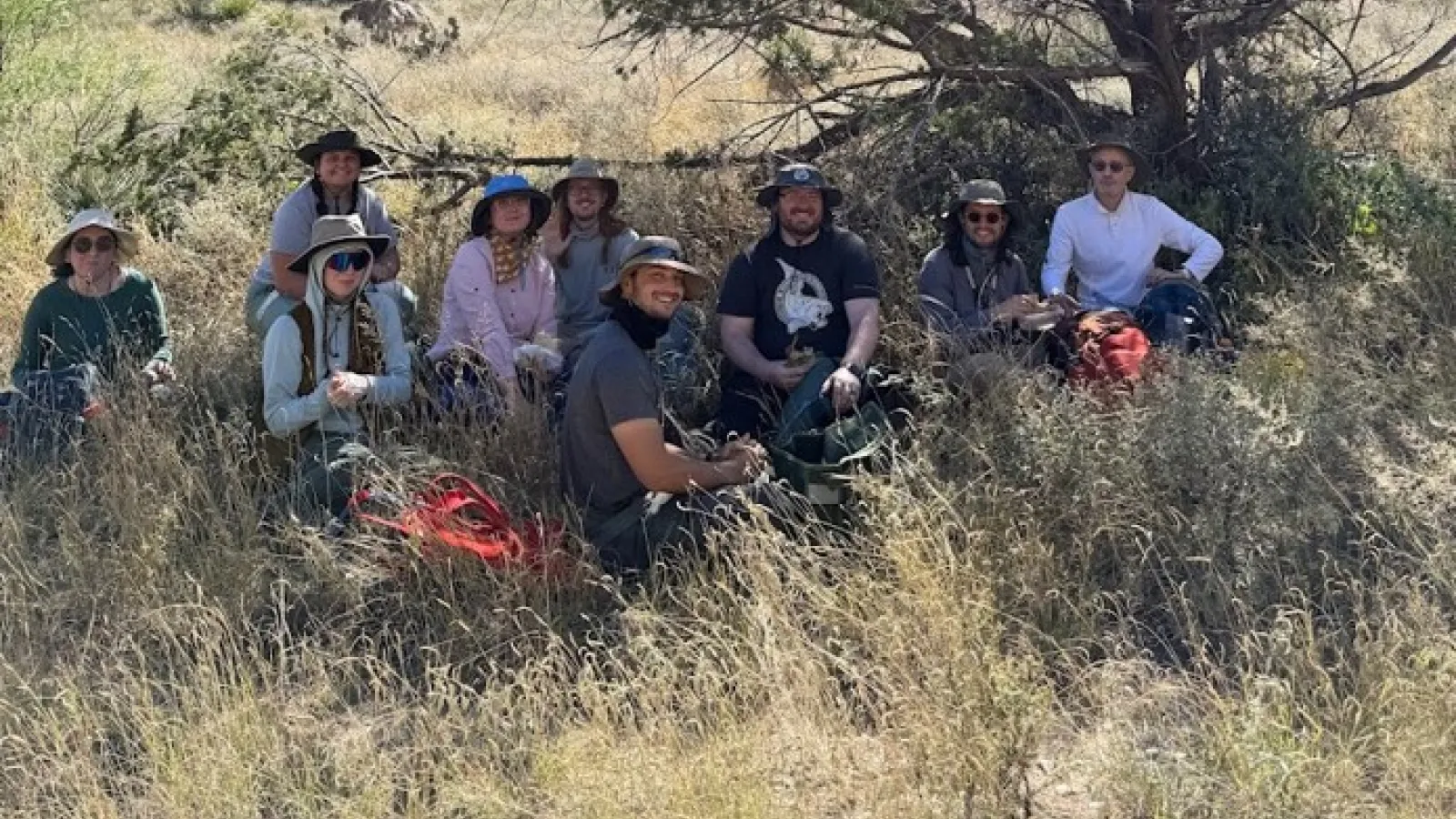
During fall break, Professors Derek Sawyer and Matthew Saltzman led a field trip to share the spectacular geology of the Guadalupe Mountains with 8 of our earth science graduate students. The 5-day trip featured visits to classic locations of Bat Cave Draw, Walnut Canyon, Frijole Ranch, Sitting Bull Falls/Last Chance Canyon, Castile Evaporites, the Rader Slide, and ending with a strenuous but rewarding hike up to Guadalupe Peak!
The Guadalupe Mountains provide outstanding continuous exposures of a wide spectrum of carbonate and siliciclastic environments across a shelf-to-basin transect. Prior to the trip, students paired up to research an outcrop locality of their choosing. In the field, day trips were led by each team and as a group worked together to interpret depositional environments and synthesize observations to infer paleogeographic evolution.
Quotes from students:
"The trip to the Guadalupe mountains helped me connect sedimentary and stratigraphy concepts, reflection seismology, and basin analysis to real world rocks! This visualization was incredibly helpful, and not to mention beautiful!"
"My favorite part of the trip was getting to witness the GSSP Capitanian Stage marker. Being able to see and feel the rocks that have denoted a globally defined boundary in the geologic time scale is something truly special."
A big thanks for funding support from the School of Earth Sciences for financial support to make this trip happen.