Earth Science Careers: Critical Minerals
Economic Geology | Mining Geology
Background
According to the American Geosciences Institute, critical minerals are primarily non-fuel minerals or mineral resources that are essential to existing and developing alternative energy technologies that are of limited supply and at great risk for their supply chains to be disrupted. U.S. Federal agencies determine that any disruption or absence of these minerals could have significant consequences for national security. The “criticality” of a mineral changes with time as supply and society’s needs shift. Demands for critical minerals such as rare Earth elements (REEs) has increased in recent years with the growth of high-tech devices for personal and commercial use such as wind turbines, solar panels, electronics, and batteries.
Earth scientists are necessary to explore for, identify, and evaluate the economic potential of current and new mineral resources for each of the elements on the list.
Current and Future Job Prospects
Earth scientists study the formation of critical minerals, explore for and locate them, plus help determine how to mine them economically, safely, and with minimal environmental impact. The world is slowly shifting its energy mix to one that is greener, but the transition will require significant mining resources. The demand for these resources has been propelled by rising demand and high prices, and the rapid growth is set to continue as some of these minerals are key to the energy transition. Employment is on pace to double by 2030.
What Graduates Do
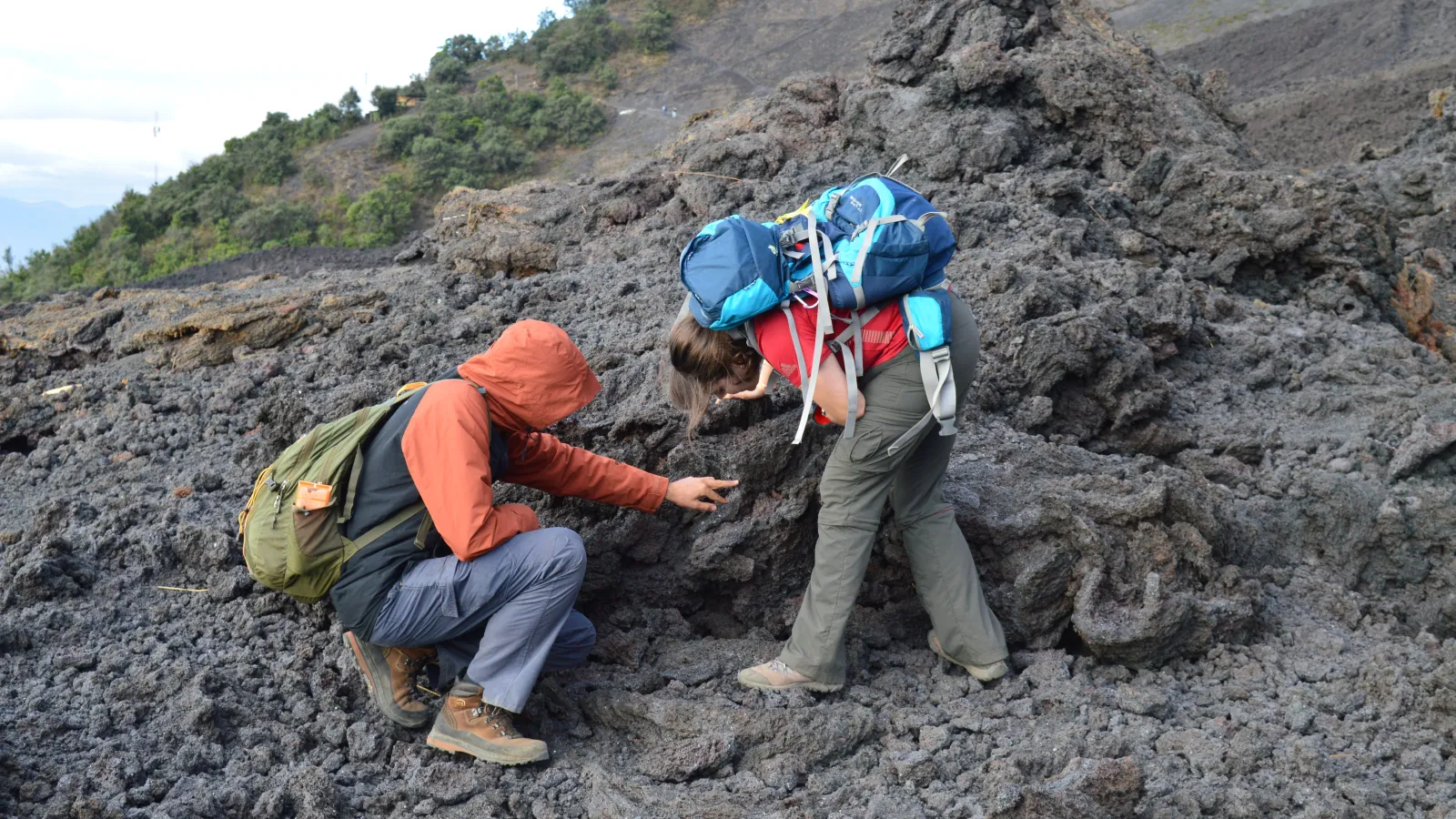
Field geologists observe geological features and study outcrops working outdoors and create maps and reports of their findings. They also monitor drilling activities and log drill cores or cuttings. Finally they work on active mines to assess ore quality on a real-time basis. Many mines are in remote locations and require the Earth scientist to live in a mining camp on a two-week on-two-week off basis. This is particularly true for mines outside the U.S. A mining geologist should be comfortable traveling to and living in third-world countries.
Resource geologists evaluate geological data to generate geologic models to identify resources and determine economic viability of projects.
Degree expectation: The required education level for a job in critical minerals development or exploration depends on whether the opportunity is for an entry-level position or more senior-level opportunity. Most entry-level jobs will require a Bachelor’s degree in geological science, geological/geophysical engineering, or mining and mineral engineering. Job available to Bachelor’s graduates are almost entirely field-based and involve onsite analysis of core and other mineral data to determine ore content and quality both in an existing mine and in areas of potential mine development. Higher-level positions typically require a Master’s degree and research-based positions, both with private companies and government agencies, require a PhD.
Major employers
- Government Agencies:
- U.S. Geological Survey (USGS)
- U.S. Department of Energy (DOE)
- National Laboratories
- U.S. Department of Agriculture (USDA)
- State Geological Surveys
- Major mining companies
- Freeport McMoRan
- Rio Tinto
- Junior mining companies
- Stillwater Critical Minerals
- Automotive industry
- Nissan USA
- General Motors
Knowledge and Skills
Essential Knowledge and Skills:
Preparation for a career in critical minerals as an Earth scientist can be obtained in an undergraduate major track with courses including—but not limited to—mineralogy, petrology, structural geology, geochemistry, geophysics, hydrogeology, ore deposit geology and field camp. Some roles may involve field geology skills and documenting geological surveys and programs. Depending on the country, region, or location you may also need to obtain a professional license from a recognized body, such as the American Institute of Professional Geologists (AIPG) or state certification entity.
Recommended Knowledge and Skills:
- Technical Skills
- Data Analysis
- Fieldwork
- GIS
- Rock and mineral identification
- Geostatistics
- Analytical Skills
- Problem solving
- Critical thinking
- Soft Skills
- Communication
- Teamwork
- Project management
- Technical writing
- Other
- Learner mindset
- Ethics and environmental stewardship
School of Earth Science programs in Critical Minerals
-
B.S. in Earth Science: Geological Sciences Subprogram
The Geological Sciences BS Subprogram provides comprehensive training in mineralogy, petrology, structural geology, and field mapping skills essential for identifying and evaluating critical mineral deposits used in clean energy technologies, electronics, and national security applications. The required 6-week summer field camp in Utah develops professional-level geological mapping and exploration skills that are directly applicable to careers in mineral exploration, mining geology, and resource assessment with industry, government geological surveys, or consulting firms.
-
B.S. in Earth Science: Geophysics Subprogram
he Geophysics BS Subprogram provides advanced training in geophysical exploration methods—including seismic, gravity, magnetic, and electrical surveys—that are essential for locating and characterizing critical mineral deposits beneath the Earth's surface without extensive drilling. This quantitative, physics-based approach prepares students for careers in mineral exploration geophysics, resource modeling, and geophysical consulting for mining companies seeking lithium, rare earth elements, cobalt, and other critical minerals needed for clean energy and technology applications.
-
Earth Science Bachelor of Arts (BA)
The Earth Sciences BA provides foundational geological knowledge of mineral formation and distribution while allowing flexibility to combine earth science with business, economics, policy, or international studies—ideal for careers in critical mineral supply chain management, resource policy, environmental compliance, or international trade of strategic materials. This liberal arts approach prepares students for roles that bridge technical knowledge with business strategy, such as mineral commodity analysis, sustainability consulting for mining operations, or policy positions addressing critical mineral security and ethical sourcing.
-
Earth Science Masters and PhD programs
Earth Sciences MS and PhD programs provide advanced research training in ore deposit genesis, geochemical analysis, mineral exploration techniques, and resource assessment modeling, enabling students to discover new deposits, develop innovative extraction methods, and evaluate the economic viability of critical mineral resources. Graduate degrees are essential for research scientist positions in government geological surveys (USGS), senior exploration geologist roles in mining companies, university faculty positions, and leadership in developing domestic critical mineral supplies to reduce dependence on foreign sources.
-
Certificate in Petroluem Geology
The Petroleum Geology Certificate provides specialized training in subsurface geology, basin analysis, and resource evaluation techniques that are directly transferable to critical mineral exploration, as many strategic minerals (lithium brines, rare earths, uranium) are found in sedimentary basins and require similar geological assessment methods as oil and gas. This certificate enhances career prospects in the energy transition sector, where geologists with petroleum industry skills are increasingly sought for geothermal energy development, carbon sequestration projects, and critical mineral exploration in sedimentary and volcanic-hosted deposits.
-
Minors in Economic Geology and other Critical Minerals Topics
An Earth Sciences minor provides foundational knowledge of geological processes that control the formation and distribution of critical mineral deposits, making it valuable for students majoring in materials science, chemical engineering, mining engineering, or business who want to understand the geological context of mineral resources. The Economic Geology, Mineralogy and Petrology, Geochemistry, and Geophysics tracks are particularly relevant, offering specialized coursework in ore deposits, mineral identification, geochemical analysis, and exploration methods that directly apply to critical mineral discovery and assessment—skills increasingly valued in the clean energy supply chain, materials innovation, and strategic resource sectors.